-
Products
-
Lab Instruments
Titration Systems Other Instruments
-
Lab Meters and Probes
Calibration Standards Other Meters and Probes
- Chemistries, Reagents, and Standards
-
Online Analyzers
EZ Series Analysers
- EZ Phosphate
- EZ ATP
- EZ Alkalinity
- EZ Aluminium
- EZ Ammonium
- EZ Arsenic
- EZ Boron
- EZ COD
- EZ Chloride
- EZ Chromium
- EZ Colour
- EZ Copper
- EZ Cyanide
- EZ Fluoride
- EZ Hardness
- EZ Hydrogen Peroxide
- EZ Iron
- EZ Manganese
- EZ Nickel
- EZ Nitrate
- EZ Nitrite
- EZ Phenol
- EZ Sample Preconditioning
- EZ Series Accessories & Parts
- EZ Series Reagents
- EZ Silica
- EZ Sulphate
- EZ Sulphide
- EZ Total Nitrogen
- EZ Toxicity
- EZ Volatile Fatty Acids
- EZ Zinc
- EZ sc Series Additional Analyzers
- EZ sc Series Inorganics
- EZ sc Series Metals
- EZ sc Series Nutrients
- Flow and Collections
-
Online Sensors and Controllers
Nitrate Sensors Flow
- EM950 Sensor for FH950
- FH950 Handheld Flow Meters
- FLO-DAR AV Sensor with optional Surcharge Velocity Sensor
- Impeller Flow Sensors
- Multiparameter Online Panels
- Claros Water Intelligence System
- Test Kits & Strips
-
Microbiology
Prepared Media
- BARTS
- Liquid MPN
- MUG Tube
- Membrane Filtration
- Paddle Testers
- Presence-Absence
- Total Count Media
- Yeast and Mold
Labware- Accessories
- Funnels, Pumps & Manifolds
- Microbiology Filters
- Petri Dishes & Accessories
- Sampling Bags
- Vials, Tubes, Bottles & Racks
-
Lab Equipment and Supply
ApparatusInstruments Glassware/PlasticwareGeneral Lab Consumables Safety Equipment Books and Reference Material
- Samplers
- Industrial UV
- Electrochemistry
-
Lab Instruments
- Parameters
- Industries
- Support
- Service
- e-Shop
- Brands


Login

 Recurring Orders
Turbidity
Hach’s Longtime Leadership in Turbidity Measurement
Turbidity measurement has been central to Hach’s innovation journey since the company’s early years. In 1957, Hach pioneered a continuous-reading turbidimeter that enabled water professionals to monitor clarity and overall water quality in real time, transforming routine assessment into continuous insight.
This breakthrough not only advanced operational awareness and decision-making for utilities and laboratories but also laid the foundation for decades of leadership in turbidity measurement. By demonstrating that practical, reliable instrumentation could deliver continuous, actionable data, Hach's innovation established a standard that has guided our ongoing commitment to dependable water analysis solutions and reinforced Hach as a long-term leader in turbidity technology.

In-Line Turbidity Meters and Turbidity Sensors
In drinking water and some wastewater treatment plants, it’s essential to monitor turbidity continuously to keep each step of the filtration process in check and avoid costly mishaps.
Process turbidity meters are simple, low-maintenance and accurate—perfect for an environment where they’re needed to provide readings at a moment’s notice.
Portable Turbidity Analyzers for Remote Locations
Setting up a lab at a construction site or near a river after a storm would be an unnecessary hassle. That’s where portable turbidity meters are most useful.
These handheld devices are durable, simple to use and able to conduct rapid tests in the field.
Laboratory Benchtop Turbidimeter

Benchtop turbidimeters are perfect for measuring grab samples and conducting an array of tests on water from multiple sources.
They’re designed to be sensitive and precise for ultra accurate measurements in controlled lab conditions.
Why Measure Turbidity?
There are many reasons to measure the turbidity of water, but the primary one is to gauge its cleanliness—whether it’s source water, such as a lake in a state park, or potable water in a municipal water distribution system.
Turbidity was originally used as a qualitative measurement in the early 1900s to classify the aesthetic quality of drinking water.
Today’s process is similar in that it relies on qualitative observations but involves instruments that use light-scattering technology for more specific readings.
Quality & aesthetics, health and compliance are just a few reasons why measuring turbidity matters.
Quality and Aesthetics
Water that looks cloudy isn’t just visually unappealing - it’s a hallmark sign of poor water quality, potentially correlating with bacterial contamination. If drinking water had high turbidity and was anything but crystal clear, it would be a red flag that the water might not be safe to drink.
High turbidity can also be an environmental concern. Although it is normal for some suspended particles to be present in lakes and rivers, the presence of too many particles in clusters can indicate that certain types of erosion are at play. Sedimentation, for example, can not only make lakes and rivers aesthetically unappealing, but it can also threaten ecosystems.
Higher levels of particulate matter prevent light from penetrating below the surface to fish and plants that live there. Those particles can also absorb more heat, making it impossible for some organisms to survive if the water temperature rises too much.
In contrast, bodies of water with low turbidity can indicate a healthy ecosystem with little erosion at play. The aesthetic benefits of low turbidity also benefit recreation and tourism industries, leading to a better quality of life overall.
Health Reasons
Water that’s rich in solid particles can offer a haven for bacteria and pathogens to grow. If left untreated, high turbidity can cause waterborne disease outbreaks. Today, the two most common threats in U.S. drinking water systems are Giardia lamblia cysts and Cryptosporidium parvum oocysts.
Such pathogens aren’t visible to the naked eye, but they can cause higher turbidity levels nonetheless. By taking a sample of drinking water and measuring its turbidity, it is possible to determine how many reflective particles are affecting it. Higher than normal levels indicate that the water may not be safe to drink and should be tested for the presence of bacteria.
Since turbidity levels change daily in drinking water sources such as the Great Lakes, regular monitoring allows plant operators to adjust their treatment operations accordingly.
Regulatory Compliance
The U.S. Environmental Protection Agency (EPA) has several standards for water quality based on turbidity measurements. Water treatment plant operators are required to calibrate turbidity meters weekly or monthly, depending on the type of equipment in use.
Turbidity levels are measured in nephelometric turbidity units (NTU). According to the EPA, potable water must be kept at below 0.15 NTU for a stream coming out of an individual filtration line, and below 0.30 NTU for the combined filter effluent of an entire water treatment plant.
Considering how sophisticated today’s turbidity meters are, the EPA’s calibration standards and NTU requirements may seem overly cautious. But this presence of caution is essential considering that many water treatment plants rely on older equipment that might not be as accurate or efficient.
Find the Right Turbidity Analyzer for You
How is Turbidity Measured?
Two main methods are used to measure turbidity, each suited to different industries.
- Spectrophotometric Method
- Nephelometric Method
Spectrophotometric Method
A spectrophotometer measures light transmittance of the water sample and the photons can be absorbed by the dissolved substances and scattered by suspended particles present in the sample. Both components contribute to the difference between the amount of light sent to the sample and coming out of it. This difference constitutes total light absorbance by the solution, and it is not easy to distinguish between the light truly absorbed by the components and the light lost to scattering by the particulate matter. The amount of scattered light can be captured by the instrument and translated into turbidity of the sample providing an additional reading besides absorbance. It adds to the design of such spectrophotometric instrumentation and makes it more complex.
Turbidimetry and the Nephelometric Method
Sensors dedicated to turbidity can measure a flow-through sample or be submerged in water to take more accurate readings using light-scattering techniques. Some turbidity meters can take readings on a sample without touching the liquid directly.
Turbidity meters are the most versatile devices for measuring turbidity, since they can be used in a wide variety of settings. Turbidity meters usually employ a beam of light, called incident light, which scatters off suspended particles in the sample being measured.
The method of measuring scattered light at 90 degrees to the incident light beam is called nephelometry, and the turbidity meter used for this type of measurement is a nephelometer.
Nephelometers detect the amount of scattered light and compare it to a calibrated measurement standard that can be set by the user. If the water is more turbid, the light will scatter more. If it’s less turbid, the light will scatter less. Only nephelometric methods to measure turbidity are accepted for regulatory compliance and reporting in the US.
Nephelometers detect the amount of scattered light and compare it to a calibrated measurement standard that can be set by the user. If the water is more turbid, the light will scatter more. If it’s less turbid, the light will scatter less. Only nephelometric methods to measure turbidity are accepted for regulatory compliance and reporting in the US.
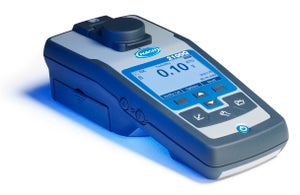
2100Q Portable Turbidimeter
Providing accurate, reliable results that give you the confidence you expect from your turbidity measurements.
Which Applications and Processes Require Turbidity Monitoring?
Several industries require regular turbidity measurements in order to keep their day-to-day operations in check. While good water quality is essential, different processes reap additional benefits from measuring turbidity.
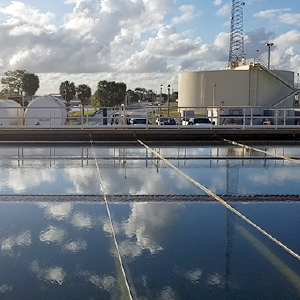
Drinking Water Treatment
While regulatory compliance is important for municipal drinking water and water treatment plants, measuring turbidity can also help keep the cost of operations down. Taking regular turbidity measurements can optimize filter performance by establishing efficient filter backwash cycles. And in the case of filter breakthrough, turbidity readings can indicate a breach of particles before it becomes a costly problem requiring an appropriate regulatory response.
Ultimately, turbidity measurements are an important part of quality control in water treatment plants. They help operators achieve their most important goal: Making water safe for consumers to drink.
Beverage Industry
Good water quality is vital in the beverage industry too, where the taste and texture of a drink are of utmost importance. For alcoholic beverages like wine and beer, flavor consistency and shelf life are at the heart of quality control. For bottled water and soft drinks, it’s easy for consumers to see when something is off—especially if turbidity is an issue.
Turbidity can vary dramatically depending on where water is sourced from in the beverage industry. Having turbidimeters operational ensures that manufacturers can monitor the quality of their water to see if it needs extra filtering or treatment. With consistent measuring, turbidity readings keep quality in check to ensure that water always meets high standards for beverage making.

Wastewater Treatment
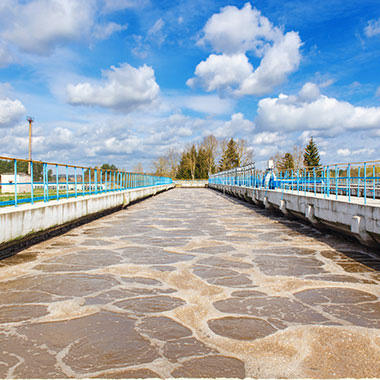
A turbidimeter can reflect on the amount of suspended solids in water at different parts of the treatment process, whether it’s for compliance reporting or for process control in real time.
Turbidity measurements can help ensure that effluent meets quality standards in municipal wastewater.
Frequently Asked Questions
How do you use a turbidimeter?
All turbidimeters have different operating requirements, so it is important to check the manufacturer’s instructions before use.
Nonetheless, most turbidimeters follow the same general procedure for benchtop or portable units:
- Uncap a clean vial and fill it with the unfiltered water sample you wish to measure. Be sure to stir the sample by gently inverting the container before pouring it into the measurement cell to resuspend particles that may have settled, while avoiding the creation of air bubbles.
- Tighten the cap on the sample (measurement) cell and hold it by the cap.
- Wipe away any excess liquid, dirt, or fingerprint marks from the cell using a soft, lint-free cloth.
- Place the turbidimeter on a flat, stable surface.
- Turn on the device.
- Set the automatic range.
- Select signal averaging.
- Insert the sample cell into the measurement compartment of the turbidimeter.
- Close the measurement compartment lid.
- Press the Read button to obtain the turbidity measurement, typically displayed in Nephelometric Turbidity Units (NTU).
What is the normal range for turbidity in water?
Before disinfection, the turbidity of drinking water should be below 1 NTU, according to the World Health Organization’s standards.
If it’s above 1-2 NTU, the effectiveness of chlorination significantly decreases. In areas where fewer resources are available, the turbidity should be below 5 NTU.
What is the difference between turbidimeters and nephelometers?
Turbidimeters and nephelometers both measure the cloudiness of water. A nephelometer is a type of turbidimeter that measures the amount of light reflected off of particles at a 90-degree angle.
They are often used to test samples with suspected low turbidity, such as filtered water samples from a drinking water treatment plant. This type of turbidimeter is accepted for regulatory reporting according to EPA and ISO standards.
What is ultra-high turbidity measurement?
Ultra-high turbidity is when a sample is so turbid that traditional nephelometric light-scatter methods are not useful. At turbidities in excess of 2,000 NTU, there’s a decrease in nephelometric signal, and traditional turbidimeters cannot take an accurate reading of light scattered by the suspended solids.
Color can also influence turbidity measurement and the use of strictly nephelometric readings is not always an accurate way to gauge ultra-high turbidity in samples of surface water, wastewater, food products, cell cultures or oil in water, for example.
Fortunately, there are other techniques that can be used to measure ultra-high turbidity: transmitted, forward-scatter and back-scatter methods. Also known as ratio turbidimetry, these methods are used for many applications where ultra-high turbidity needs to be measured, such as monitoring the fat content in milk, for example.
What is the correlation between turbidity and total suspended solids (TSS)?
The foremost significant difference between these two parameters is that turbidity is method-derived, while TSS is an absolute parameter.
That means that TSS can be measured gravimetrically by evaporating all liquids, then weighing the solid residue and expressing concentration in milligrams per liter (mg/L). The difference is also reflected in dilution - the TSS of diluted samples is linear, while turbidity may not change linearly with the dilution of samples or standards.
A turbidimeter can estimate the TSS in a liquid. However, this only works if there is an established correlation between turbidity and the TSS of the sample, which may not be sustainable and can depend on various conditions.
What is the history of turbidity?
The first formal measure of water turbidity (circa 1900) was called the Jackson Candle Method (Figure 1). It was essentially a vertical glass tube mounted over a candle. The scale on the tube was calibrated using dilutions of a standard reference solution comprising 1,000 parts per million (ppm) of diatomaceous earth (silica) in distilled water.
The calibrated units of measure on the tube were called Jackson Turbidity Units (JTU). Sample water was poured into the tube until the distinct image of the candle flame was no longer visible to the human eye when viewed from straight above. The depth of water in the tube at that point corresponded to a distinct JTU reading on the scale of the tube.
Compared to today’s instruments and methods, that original method was a relatively crude measure of turbidity that could result in inconsistencies due to differences in the viewer’s eyesight and the candle used.
In 1926, Kingsbury, Clark, Williams and Post developed a new standard reference solution (formazin polymer) that was easier to formulate. It provided greater consistency than Jackson’s diatomaceous earth reference standard, which could vary according to the material source.
Formazin also does a good job of replicating the particulates and turbidity typically experienced in drinking water applications. One advantage of formazin is that, even though not all of the polymer chains are of an identical size, it produces a very regular response every time it is synthesized.
The formazin standard was a major step toward standardizing turbidity testing. It is still in use today, while other turbidimetry components — such as light sources and light detectors — have been refined to eliminate the variables of candlelight and human eyesight.
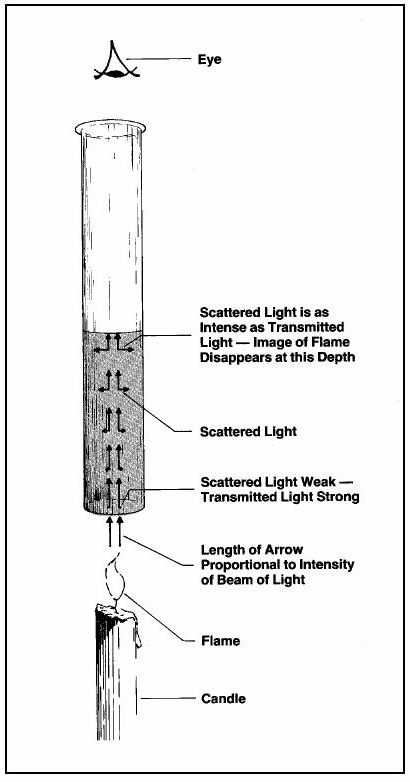
Figure 1.The original Jackson Candle Turbidimeter was based on the amount of light transmitted from a candle through a column of water.